

Anicca, Dukkha, Anatta - The 3 Marks of Existence
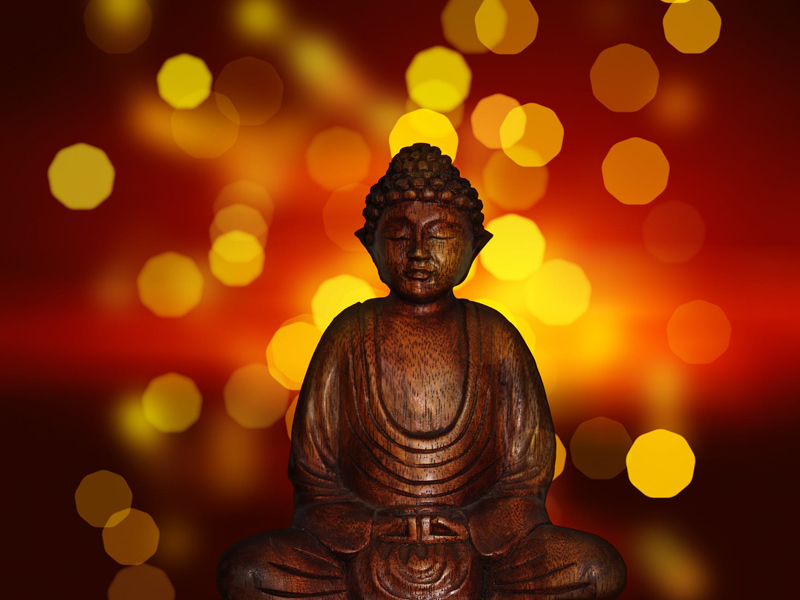
The Buddha's teachings arose from his own observations and meditations, and he urged us all to test and discover them for ourselves. Among his most fundamental teachings is that of the 'three marks of existence' or the 'three dharma seals.' The Buddha observed that there are three characteristics of all worldly phenomena: anicca, or impermanence, dukkha, or suffering, and anatta, or no-self. Every aspect of our existence, from the physical to the psychological to the spiritual, shares these three characteristics. Developing a deep understanding of these is the foundation for wisdom on the Buddhist path.
Here's a brief description of each in more detail:
Anicca, Impermanence - Everything is in a constant state of change. Nothing ever ceases to exist, it just changes form. In nature, a seed grows into a plant, and perhaps creates a flower, which eventually dies and falls to the ground to become part of the earth that grows a new seed. The same is true for all physical objects in some way, including our own bodies. Anicca is also seen in our inner life, in our emotions and thoughts - if we observe our mind and moods we see that they are in a constant state of movement and change, and that we can often hardly remember the emotions or thoughts we experienced so vividly at a prior time. Both pleasure and pain, and everything in between, are transient. Mindfulness and meditation practice help us to see this directly for ourselves. When we observe our own mind, we realize how every thought arises, captures our attention, and then dies away. If we observe the physical world, we can discover anicca marks all phenomena there as well.
Dukkha, Suffering - Although dukkha is usually translated as 'suffering' this is not quite right. Other terms sometimes used are 'stress' or 'unsatisfactoriness'. But dukkha does not just refer to painful and difficult experiences, it refers to the fact that due to anicca, no single attainment, possession, or life situation can ultimately bring us lasting happiness. We might experience periods of joy based on these things, but because that joy is dependent on external phenomenon, it will eventually end. Our mind has a natural grasping quality - it is always moving on to the next object of attachment, the next desire. When it is not doing this, it is consumed with keeping away that which we don't want, or complaining about it. To attain true lasting happiness, happiness not dependent on our moment-to-moment circumstances, we must see through this 'monkey mind'. We must break the cycle of dukkha. A profound understanding of dukkha is at the heart of the Buddha's teachings on the Four Noble Truths, the foundation teaching of Buddhism.
Anatta, No-Self - According to Buddha, ultimately nothing has an immutable, core essence. Everything is composed of energy combined in different physical, mental, emotional or spiritual structures to create the appearance of solidity and immutability on the worldly plane. But at the core of these structures, there is 'no-thing' there. This applies to our deepest selves as well, and this teaching of no-self is one of the core differences between Buddhism and other religions that posit an eternal soul or spirit. It is also what distinguishes Buddhist teachings on rebirth from other theories of reincarnation. We are an ever-changing spectrum of energies. When we see this for ourselves, we can let go of our attachment to our idea of ourselves as a limited self.
Nirvana, enlightenment, is sometimes called the 'fourth seal', but it does not share the three marks of existence. The different branches of Buddhism differ on how to discuss nirvana, as it is difficult to use language without attributing either permanence (anicca) or essence (anatta) to it - without nirvana itself becoming a mental 'concept'. Nirvana is better understood as the fruit of Buddhist spiritual practice, the foundation of which is the Noble Eightfold Path. Nirvana is realization that surpasses all states and mental concepts. The Buddha himself calls it the 'highest happiness'. Through a deep understanding of anicca, dukkha, and anatta, we can free ourselves of the misperceptions that keep us trapped in the worldly cycle of unhappiness and dissatisfaction. Then the ground for true, lasting joy is found.
Here's a brief description of each in more detail:
Anicca, Impermanence - Everything is in a constant state of change. Nothing ever ceases to exist, it just changes form. In nature, a seed grows into a plant, and perhaps creates a flower, which eventually dies and falls to the ground to become part of the earth that grows a new seed. The same is true for all physical objects in some way, including our own bodies. Anicca is also seen in our inner life, in our emotions and thoughts - if we observe our mind and moods we see that they are in a constant state of movement and change, and that we can often hardly remember the emotions or thoughts we experienced so vividly at a prior time. Both pleasure and pain, and everything in between, are transient. Mindfulness and meditation practice help us to see this directly for ourselves. When we observe our own mind, we realize how every thought arises, captures our attention, and then dies away. If we observe the physical world, we can discover anicca marks all phenomena there as well.
Dukkha, Suffering - Although dukkha is usually translated as 'suffering' this is not quite right. Other terms sometimes used are 'stress' or 'unsatisfactoriness'. But dukkha does not just refer to painful and difficult experiences, it refers to the fact that due to anicca, no single attainment, possession, or life situation can ultimately bring us lasting happiness. We might experience periods of joy based on these things, but because that joy is dependent on external phenomenon, it will eventually end. Our mind has a natural grasping quality - it is always moving on to the next object of attachment, the next desire. When it is not doing this, it is consumed with keeping away that which we don't want, or complaining about it. To attain true lasting happiness, happiness not dependent on our moment-to-moment circumstances, we must see through this 'monkey mind'. We must break the cycle of dukkha. A profound understanding of dukkha is at the heart of the Buddha's teachings on the Four Noble Truths, the foundation teaching of Buddhism.
Anatta, No-Self - According to Buddha, ultimately nothing has an immutable, core essence. Everything is composed of energy combined in different physical, mental, emotional or spiritual structures to create the appearance of solidity and immutability on the worldly plane. But at the core of these structures, there is 'no-thing' there. This applies to our deepest selves as well, and this teaching of no-self is one of the core differences between Buddhism and other religions that posit an eternal soul or spirit. It is also what distinguishes Buddhist teachings on rebirth from other theories of reincarnation. We are an ever-changing spectrum of energies. When we see this for ourselves, we can let go of our attachment to our idea of ourselves as a limited self.
Nirvana, enlightenment, is sometimes called the 'fourth seal', but it does not share the three marks of existence. The different branches of Buddhism differ on how to discuss nirvana, as it is difficult to use language without attributing either permanence (anicca) or essence (anatta) to it - without nirvana itself becoming a mental 'concept'. Nirvana is better understood as the fruit of Buddhist spiritual practice, the foundation of which is the Noble Eightfold Path. Nirvana is realization that surpasses all states and mental concepts. The Buddha himself calls it the 'highest happiness'. Through a deep understanding of anicca, dukkha, and anatta, we can free ourselves of the misperceptions that keep us trapped in the worldly cycle of unhappiness and dissatisfaction. Then the ground for true, lasting joy is found.
You Should Also Read:
Four Noble Truths
Noble EightFold Path
Introduction to Buddhism E-book

Related Articles
Editor's Picks Articles
Top Ten Articles
Previous Features
Site Map
Follow @mommymystic
Tweet
Content copyright © 2023 by Lisa Erickson. All rights reserved.
This content was written by Lisa Erickson. If you wish to use this content in any manner, you need written permission. Contact Lisa Erickson for details.
