

In Drawer Spice Rack – Product Review

I have way too many herbs and spices. And they were all pushed together in one cupboard behind each other. Each time I wanted to use one I would have to pull out many before I found the one I was looking for. I split them and put them on two shelves, one starting with A-M, the other N through Z. Even so, it was still difficult to find the one I wanted.
There are many shelves you can put on the wall that are specially built for spice racks, but I don’t have any wall space for them, my kitchen walls are filled with cupboards.
After searching for a while I discovered the spice rack you can put in a drawer. I measured my drawer very carefully and purchased one. I was a little nervous as to whether or not it would fit because it claimed to be able to fit a range of drawer widths. But when it came, I could see why.
The drawer spice rack is actually made up of two pieces, which overlap, thus very easily you are able to fit it for whatever width you need. There are spaces for large, medium and small spice jars and I managed to fill it very easily. Now, whenever I need an herb or spice, I pull out the spice drawer and can very easily find the one I am looking for. It is certainly a great improvement to my kitchen.
Here is my spice rack:

And here is a link to Amazon if you want to buy one for yourself:


Expand-A-Drawer Spice Organizer
There are many shelves you can put on the wall that are specially built for spice racks, but I don’t have any wall space for them, my kitchen walls are filled with cupboards.
After searching for a while I discovered the spice rack you can put in a drawer. I measured my drawer very carefully and purchased one. I was a little nervous as to whether or not it would fit because it claimed to be able to fit a range of drawer widths. But when it came, I could see why.
The drawer spice rack is actually made up of two pieces, which overlap, thus very easily you are able to fit it for whatever width you need. There are spaces for large, medium and small spice jars and I managed to fill it very easily. Now, whenever I need an herb or spice, I pull out the spice drawer and can very easily find the one I am looking for. It is certainly a great improvement to my kitchen.
Here is my spice rack:
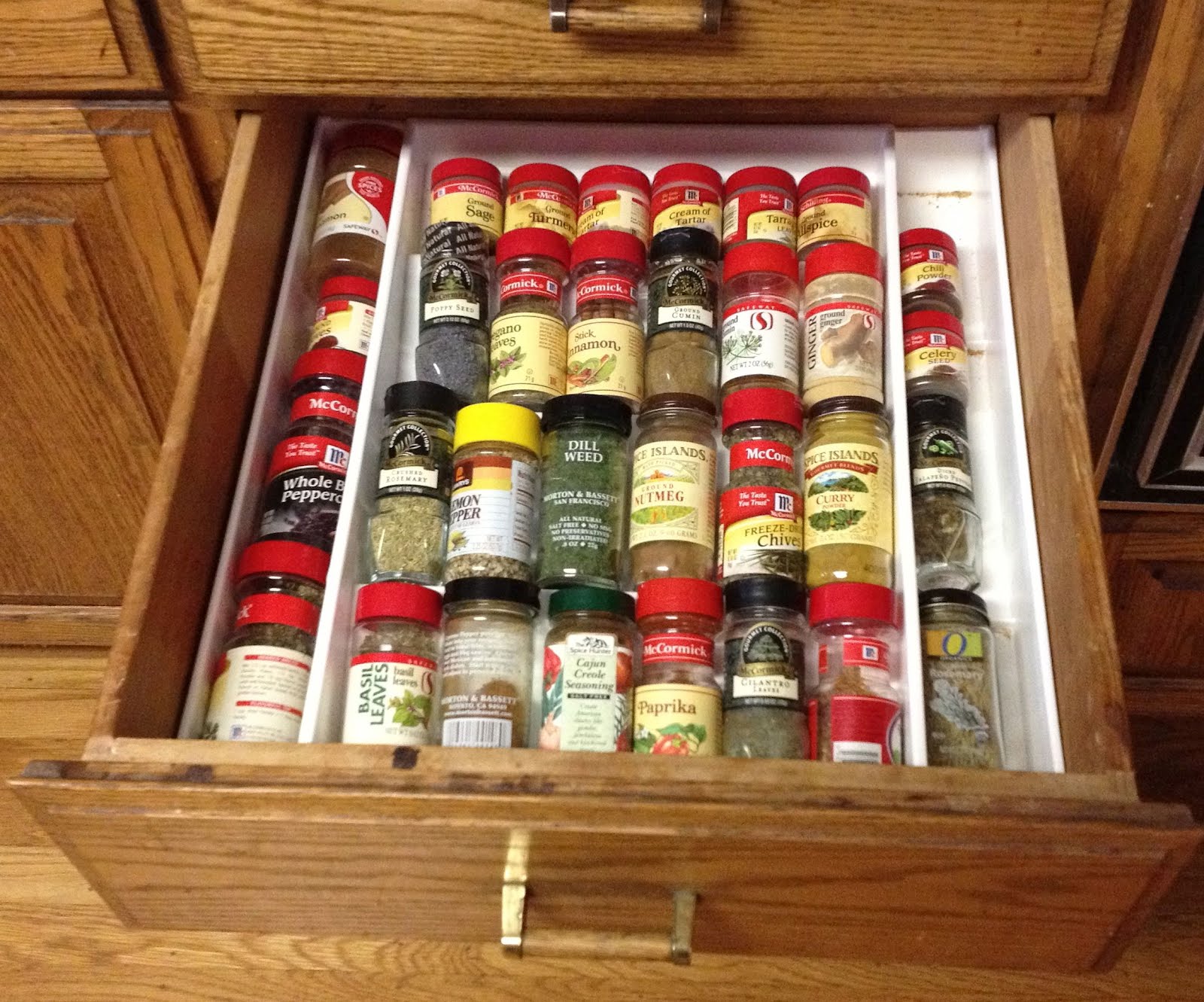
And here is a link to Amazon if you want to buy one for yourself:
Expand-A-Drawer Spice Organizer
You Should Also Read:
Living Simply - Improve Your Life with Less Clutter

Related Articles
Editor's Picks Articles
Top Ten Articles
Previous Features
Site Map
Content copyright © 2023 by Tina Razzell. All rights reserved.
This content was written by Tina Razzell. If you wish to use this content in any manner, you need written permission. Contact Tina Razzell for details.
