Kids Corner
About Copernicus - for Kids 
Since the name of Nicolaus Copernicus is still well known nearly five hundred years after his death, why was his grave unmarked until 2010? Find out about the life of the quiet revolutionary that turned our view of the universe inside out.
Asteroid Facts for Kids
Observers used to call them “vermin of the skies”. Asteroids weren't interesting and their streaks ruined sky photos. But no more! They can tell us about the early Solar System. One of them may have finished off the dinosaurs, and more could be coming our way.
Astronomy Photographer of the Year 2012
An exquisite whirlpool of two galaxies held together by invisible bonds was this year´s winning image. And the Young Astronomy Photographer of the Year captured the beauty of the Pleiades, a cluster of hot blue stars surrounded by a delicate haze of reflective dust. A feast for the eye.
Bang! - The Universe Verse - book review
What would it take to explain the Big Bang Theory? James Lu Dunbar's "Bang!" might do it - and amuse you and your children at the same time. It's a splendid little book which tells the story of the universe in verse and appealing graphics.
Biggest in the Solar System - Facts for Kids
The biggest impact crater on Earth is the Vredefort crater in South Africa, and the highest mountain is Everest. But what about the rest of the Solar System? Which features are the biggest ones in the whole Solar System?
Books for Young People
Reviews of books aimed at young people or which would be suitable for school-aged pupils.
Ceres - Facts for Kids
When Ceres was discovered in 1801, astronomers assumed it was a planet. But when many more of these bodies were found, they were all finally listed as asteroids. In 2006 Ceres became the only asteroid also to be listed as a dwarf planet.
Comets - Facts for Kids
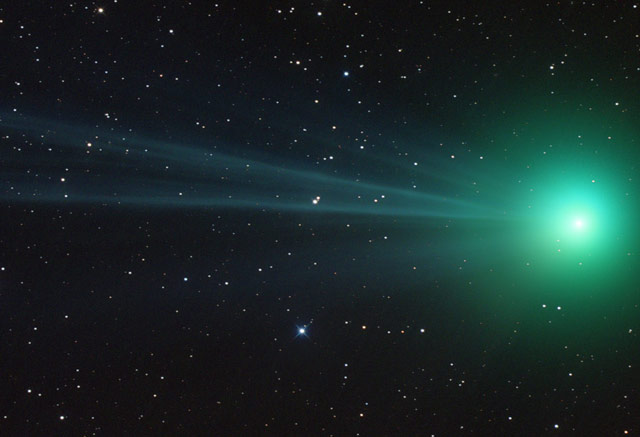
People used to think comets were warnings of disasters. Today we know that they are icy visitors from the most distant regions of the Solar System. Other stars have exoplanets and they seem to have exocomets too.
Constellations - Facts for Kids
Some of our constellations go back thousands of years. Others were invented when Europeans began to explore the distant seas of the southern hemisphere. But what?s the difference between a constellation, an asterism and a star cluster? And what does the constellation Pyxis represent?
Discovering Uranus - for Kids
You can see planets without a telescope. People have been seeing Mercury, Venus, Mars, Jupiter and Saturn for thousands of years. Even though Uranus was the first planet discovered by telescope, sometimes it can be seen without one.
Distances in Space - Facts for Kids
How tall are you? How far away is New York City? How far away is the Moon? How about the nearest planet, star, or galaxy? Do we measure them in inches, kilometers or light years? Find out why we choose some measuring units and not others.
Dorado and Volans – Facts for Kids
Flying fish live in warm oceans, and so do the mahi mahi fish. Sailors in the southern seas saw the flying fish using their side fins like wings to glide through the air – sometimes chased by hungry mahi mahi. Dorado (Mahi mahi) pursues Volans (Flying fish) in the stars of the southern sky.
Dwarf Planet Tour for Kids
After all the fuss about Pluto, everybody knows that it's a dwarf planet now. But it's only one of five. Here's a mini tour of all five, including the one where a heatwave is the temperature of Antarctica, the one shaped like an egg, and one whose year is over 500 Earth years long. All aboard!
Enceladus - Facts for Kids
Enceladus is the coldest of Saturn's moons and one of the most interesting. It's covered with ice, but under the ice is a liquid ocean. Scientists wonder if there might be life in that ocean.
Eris – Facts for Kids
At first astronomers thought Eris was bigger than Pluto, and that it was a tenth planet. But both Eris and Pluto ended up as dwarf planets. Eris is now farther away from the Sun than any known object except for some comets. It's so cold that its atmosphere has frozen and dropped to the ground.
Europa - Facts for Kids
Jupiter's moon Europa seems to have a large ocean under its icy crust. Never mind Mars or Venus! Many scientists think that Europa would be a good place to look for life.
Galaxy Facts for Kids
The Milky Way used to be the only galaxy people knew. Big telescopes changed that. Now we know there are billions of them. They come in different sizes and shapes and have some surprises for us.
Halley's Comet for Kids
It visits every 75 years or so, appearing like a celestial ghost in our skies. In the past it has been a bad omen and scary object, but last time it came it was a big event around the world. What is it? Halley's Comet, the most famous comet of all.
Haumea – Facts for Kids
Out in the Kuiper Belt, beyond Neptune and even farther away than Pluto, lie products of an ancient collision – they include a dwarf planet and its two moons.
Herschel Partnership - for Kids
The Herschels were one of the greatest astronomical families of all time. A partnership of two brothers and a sister built the best telescopes of their time, and with those telescopes mapped the deep sky. They changed the way astronomers understood the heavens.
How the Sun Was Born – Facts for Kids
The Sun didn't exist five billion years ago. But the material to make it did. There was even enough to make a number of stars and still have material left over for planets, moons and other small bodies. What was this material, and how did it end up as stars and planets?
How the Sun Will Die - Facts for Kids
The Sun was born in a nebula five billion years ago. It's going to keep going for another few billion years, but it won't last forever. Here's the story of what happens to a sunlike star when it runs out of fuel. And some of it is very strange.
John Herschel – Facts for Kids
It can be hard to be the son of a famous man. Although his father was the first person in history to discover a planet, John Herschel had his own illustrious career. He was not only an astronomer, but also a brilliant mathematician, a talented artist, musician and poet, and a loving family man.
Jupiter - Facts for Kids
King of the Roman gods, comet-killer, two and a half times the mass of all the other planets put together, shortest day of any planet in the Solar System. It's Jupiter! Find out more.
Jupiter's Moons – Facts for Kids
Jupiter has at least 79 moons. Some of them are only half a mile long, but one is bigger than the planet Mercury. Which moon has hundreds of volcanoes, and which one has a deep ocean under an icy surface? Find out here.
Kuiper Belt - Facts for Kids
Pluto's not the last planet, it's the first Kuiper Belt Object. The Kuiper Belt is made up of millions of icy bits left over from the beginning of the Solar System. It starts at 30 AU - that's 30 times farther from the Sun than the Earth. From there it stretches for another 2 billion miles!
Lepus the Hare – facts for kids
The constellation Lepus represents a hare, an animal related to rabbits. It's a very old constellation. Nearly 2000 years ago the astronomer Ptolemy included it in his list of 48 constellations.
Life and Death of Massive Stars – Facts for Kids
Stars are all born in much the same way, but they live and die in different ways. How hot will a star be? How long will it shine? How will it die? That all depends on the star's mass.
Light Pollution - Facts for Kids
Thieves are stealing something that belongs to you. It´s something you inherited from countless generations of your ancestors: a view of the night sky. The unnecessary lighting that hides it also damages wildlife, increases air pollution and can damage your health. What can we do?
Makemake - Facts for Kids
Mike Brown, Chad Trujillo and David Rabinowitz discovered an icy object out in the Kuiper Belt nearly five billion miles from the Sun. Three years later the International Astronomical Union (IAU) listed it as a dwarf planet, and named it Makemake.
Mars - Facts for Kids
Mars has no little green men, but it's a fascinating place. It has a mountain three times the height of Everest and a deep valley that dwarfs the Grand Canyon. Although Mars has no liquid water on the surface, if the southern polar icecap melted, it could cover the planet 36 feet deep in water.
Mercury - 10 Facts for Kids
Mercury's day side is hot enough to melt lead, but there's ice at the poles. Before we had space probes, Mercury was a mystery hidden in the Sun's glare, but that's changed now.
Meteors and Meteorites – Facts for Kids
What's the difference between meteors and meteorites? And what is a meteoroid? Are they different from shooting stars, falling stars and fireballs?
Milky Way - Facts for Kids
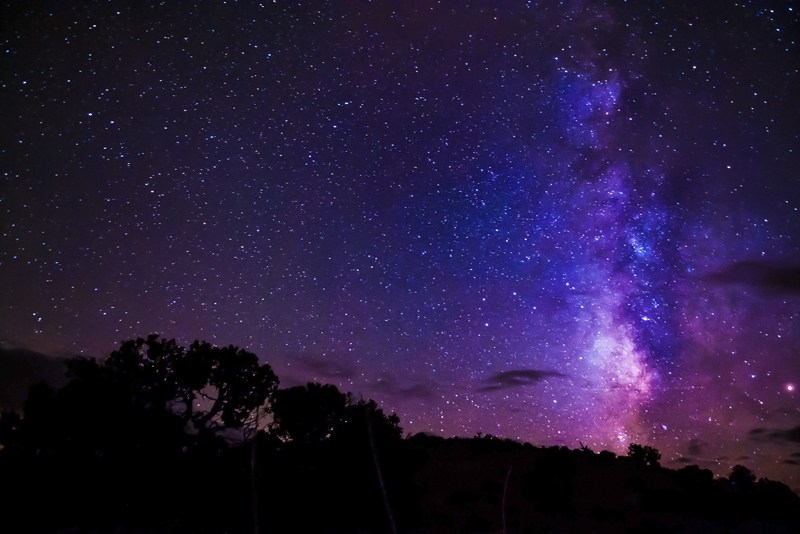
We live in the Milky Way galaxy. When we look up at the sky, all the stars we see are part of the Milky Way. But did you know that most of the Galaxy is made of mysterious, invisible dark matter and that there’s an even darker secret at its heart?
Moons of Mars - Facts for Kids
Earth's moon is "the Moon” because it was the only one people had ever seen until 1610. That's when Galileo discovered moons orbiting Jupiter. Why did it take until 1877 for someone to find the moons of our neighbor Mars?
Moons of Uranus - Facts for Kids
William Herschel discovered the planet which was named Uranus after the ancient Greek sky god. Although Uranus has at least 27 moons, most of them weren't discovered until at least the twentieth century.
Nebulae - Facts for Kids
Nebulae are great clouds of gas and dust in the spaces between stars. Some of them are made from dying stars. Others are the nurseries for new stars. Here are ten facts about these amazing objects.
Neptune - Facts for Kids
Far beyond Uranus is another blue planet, one named for the Roman sea god. It could well have been named for a god of winds as it's the windiest place in the Solar System. And it has a captured moon that was a Kuiper Belt object like Pluto.
Neptune's Moons - Facts for Kids
Neptune is the last planet out from the Sun. It has fourteen known moons and they're a mixed bag. One of them – Triton – has over 99% of the total mass of Neptune's moons. Thirteen little moons share what's left. Only two of the moons were discovered before 1981.
Neptune's Triton - Facts for Kids
Neptune, named for the Roman sea god, was discovered in 1846. And 17 days later, William Lassell found a moon. Its moon is probably a captured Kuiper Belt object, similar to Pluto, but colder than Pluto. It's a strange object. Nasa is considering a mission to Neptune and Triton to have a look.
Oort Cloud - Facts for Kids
Where do comets come from? The Oort Cloud is home to a trillion comets at the edge of the Solar System, nearly half way to the next star. Sometimes they get kicked out and sometimes they come to visit the inner Solar System.
Orion's Dogs - Facts for Kids
There are several canines in the night sky, including a wolf and a fox. But the best known canine constellations are Canis Major (the Greater Dog) and Canis Minor (the Lesser Dog).
Pluto - Facts for Kids
Pluto is smaller than our Moon, but it's the biggest known dwarf planet. On the inner edge of the Kuiper Belt, the Sun is so far away it would look like a bright star from there. And Pluto can get so cold that its atmosphere freezes and falls to the ground.
Pluto's Moons - Facts for Kids
Pluto was the baby of the Solar System planets. Although only slightly bigger than Russia, Pluto is the biggest known dwarf planet. It has five moons, and that's more than there are in the inner Solar System. Earth has one moon, Mars has two, and Mercury and Venus have none.
Polaris – Facts for Kids
Polaris, the North Star, has been a navigation star for 1500 years. It's easy to find using the pointer stars of the Big Dipper. Did you know that it hasn't always been the North Star? Or that it's really three stars?
Quaoar - Facts for Kids
50000 Quaoar - a cubewano and probable dwarf planet in the distant icy Kuiper Belt. The number comes from the Minor Planet Center and the name from the creation god of the Tongva people whose ancestors have lived in the Los Angeles area for a thousand years and more.
Quasars - Facts for Kids
Quasars are the brightest and some of the most distant objects in the Universe. When we see them, we are looking into the past, to a time before our Solar System existed.
Red Dwarfs - Ten Facts for Kids
If you go outside on a clear dark night, you might see a few thousand stars. But without a telescope, not a single one will be the most common type of star in the Universe. You won't see red dwarfs, the stars that will still be shining in the far distant future when all the others have died.
Saturn Facts for Kids
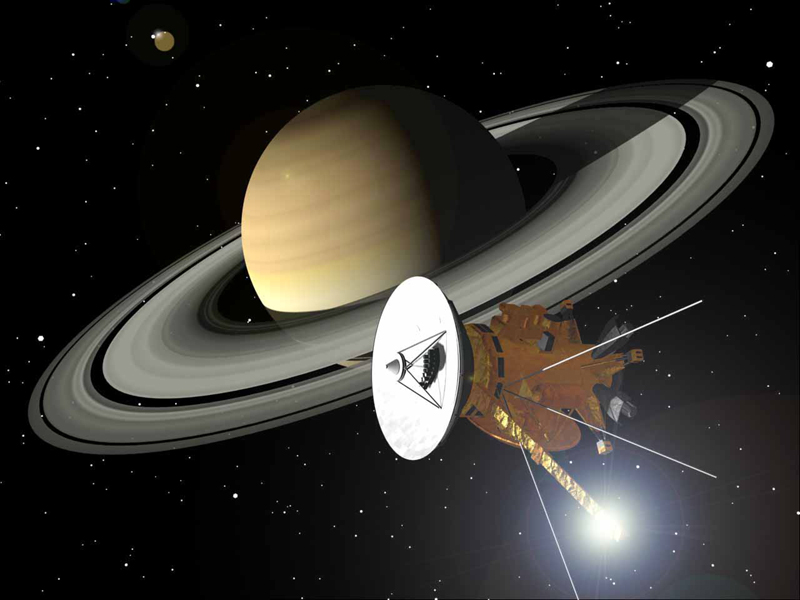
Saturday is Saturn's day. Saturn, a god of ancient mythology, is the planet with the beautiful rings. For 13 years, the Cassini space mission studied Saturn, its rings and moons. We now know of 145 moons of Saturn.
Saturn's Moon Rhea - Facts for Kids
Even being the Saturn's second biggest moon doesn't make Rhea very big. We could set three Rheas down on the USA and have room to spare. It whizzes around Saturn so quickly that a month is only four and a half Earth days long. It's so cold there that ice is as hard as rock.
Saturn's Moons – Facts for Kids
Everybody recognizes Saturn's rings, but that isn't all that circles the planet. There are shepherd moons, a moon with cold volcanoes erupting, a planet-sized moon, and more. And it took nearly two hundred years for the first seven known moons to be named.
Solar System - Tour for Kids
Take a quick tour of the Solar System, the star system where we live. It´s our neighborhood of the Milky Way. Find out what lies between the Sun and the edge of the Oort Cloud.
Star Names in Harry Potter Stories
In the Harry Potter books there are a number of characters that are named for stars and constellations. You can find out more about these stars - and for those that don't know the books, there's a bit of background on the characters.
Stars – Ten Facts for Kids
Stars are nuclear reactors. If a really big one took the Sun's place, it would swallow up the Sun and everything as far away as Jupiter. Yet others aren't much bigger than Jupiter. Big stars don't live very long and die in a blaze of glory. Smaller ones live for billions of years.
Stars – Ten Facts for Kids
Stars are nuclear reactors. If a really big one took the Sun´s place, it would swallow up the Sun and everything as far away as Jupiter. Yet others aren´t much bigger than Jupiter. Big stars don´t live very long and die in a blaze of glory. Smaller ones live for billions of years.
Story of Rosetta – for Kids
Rosetta went where no space mission had been before! It caught up with a comet in deep space and went into orbit around it. Its lander Philae was the first ever to land on a comet. At the end of the mission, Rosetta also landed on the comet to join it and Philae on the comet's journey.
Tarantula Nebula - Facts for Kids
Arachnophobes needn't worry about this tarantula. It's not a big spider, it's a big nebula that looks a bit like a spider in some photos. It's also so far away that its light takes 170,000 years to get here. Stars are born there, stars die there, and it's a spectacular object.
The Moon - Facts for Kids
The Moon has no air, no sound, no weather and no liquid water. It even has places that are colder than Pluto. But since gravity is weaker there, you could throw a ball a long way, and the footprint you left might last a hundred thousand years or more.
The Sun – Facts for Kids
The Solar System belongs to the Sun. More than 99% of all the matter in the Solar System is in the Sun. Everything else - planets, moons, asteroids, icy bodies, comets - is made from stuff left over from making the Sun. It's the Sun's gravity that holds everything together.
Titan - Facts for Kids
Saturn's moon Titan is bigger than the planet Mercury. It's also the only moon with a thick atmosphere. In fact the atmosphere is so smoggy, we can't see the surface. How is Titan like Earth?
Uranus - Facts for Kids
This ice giant is twenty times farther from the Sun than we are. It circles the Sun lying on its side, so each half the planet is dark for over twenty years at a time. It's the planet Uranus, discovered in 1781 by William Herschel who named it George.
Venus - Facts for Kids
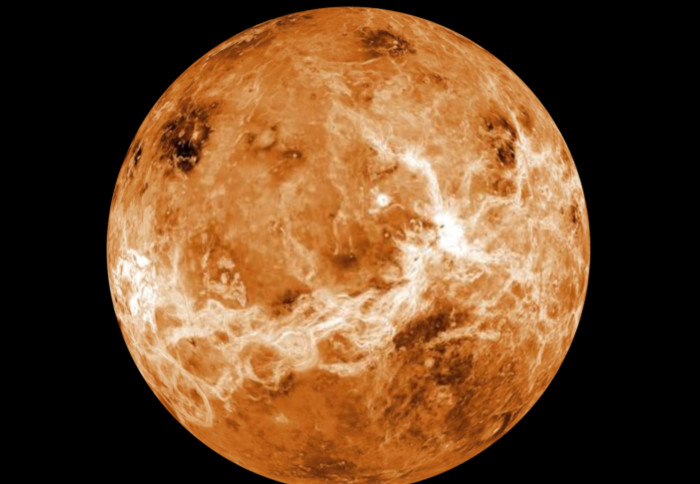
It's the planet most likely to be mistaken for a UFO. It spins backwards on its axis. A year is two days long. It's Venus! Some call it Earth's twin, but it isn't much like home.
Vesta - Facts for Kids
NASA's Dawn mission spent 14 months orbiting the asteroid Vesta. Vesta's an unusual object, too small to be a dwarf planet. Yet it has the Solar System's tallest mountain, and canyons as big as Earth's Grand Canyon. And it may help scientists to understand the early Solar System.
Visiting Venus - Facts for Kids
Would you like to visit another planet? How about Mars or Venus? Apollo astronaut Buzz Aldrin wants to see astronauts on Mars, but could Venus be a better choice?
Top Ten Articles
Previous Features
Site Map
Content copyright © 2018 by . All rights reserved.
This content was written by . If you wish to use this content in any manner, you need written permission. Contact Mona Evans for details.