Aloes - an introduction
The word aloe may conjure up images of lotions or salves known for their skin-soothing properties. Aloe plants, however, have sharp toothed leaves which look anything but soothing to the skin. This interesting plant can both heal and hurt.
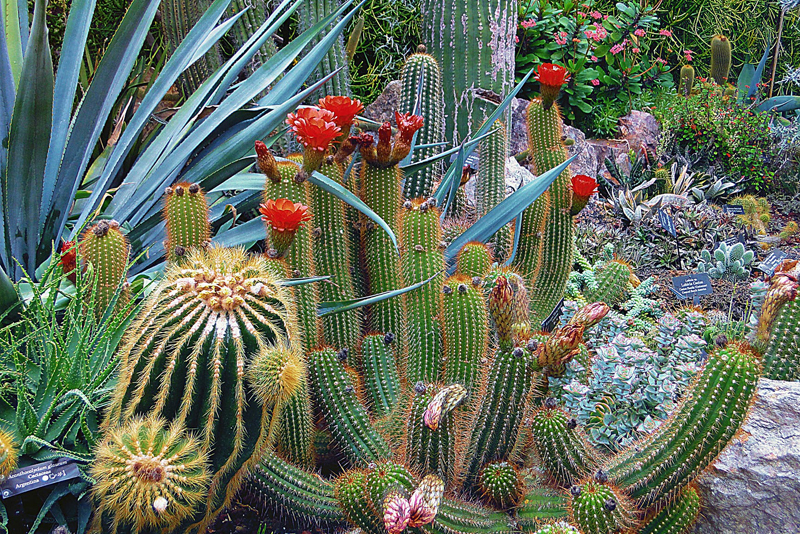
There are hundreds of species of aloes which are native to Africa, including southern Africa, the tropical mountain areas, Madagascar and the Arabian peninsula. They store water in their thick waxy leaves which are arranged in a rosette reminiscent of a pineapple top. Many have clusters of yellow, red or orange flowers which hover above the plant on long spikes. The sharp tooth-like protrusions on the leaf edges keep it from being devoured by animals seeking something to quench their thirst.
The aloe known for its medicinal properties is aloe vera. A piece broken off and rubbed on a slight burn may soothe the skin. Aloe vera juice is also available in markets as a digestive aid, although some people are allergic to it.
A common aloe readily available in many nurseries is gold-toothed aloe or aloe nobilis. It can be grown outdoors in zones 9 – 11 and is hardy to 20°F. It can take full sun. This aloe does not get much more than 1 foot high. It has many “pups” which can be used to start new plants. Its red flower spikes are quite striking, and a variety with variegated leaves is available.
Aloe maculata is another fairly small aloe, reaching about 18 inches in height. It has distinctive striped patterns on its leaves, which give it its common name, zebra aloe. Its orange flowers come in several flushes from mid-spring through summer.
The cultural requirements for aloes are similar to other succulents. They require fast draining soil and do best with infrequent watering. They are subject to few pests other than mealybugs and spider mites. Mealybugs can be avoided by not allowing the soil around the plant to become soggy. They can be grown in containers and the smaller ones will survive indoors given sufficient sunlight. Aloes do not die after flowering.
There are hundreds of species of aloes which are native to Africa, including southern Africa, the tropical mountain areas, Madagascar and the Arabian peninsula. They store water in their thick waxy leaves which are arranged in a rosette reminiscent of a pineapple top. Many have clusters of yellow, red or orange flowers which hover above the plant on long spikes. The sharp tooth-like protrusions on the leaf edges keep it from being devoured by animals seeking something to quench their thirst.
The aloe known for its medicinal properties is aloe vera. A piece broken off and rubbed on a slight burn may soothe the skin. Aloe vera juice is also available in markets as a digestive aid, although some people are allergic to it.
A common aloe readily available in many nurseries is gold-toothed aloe or aloe nobilis. It can be grown outdoors in zones 9 – 11 and is hardy to 20°F. It can take full sun. This aloe does not get much more than 1 foot high. It has many “pups” which can be used to start new plants. Its red flower spikes are quite striking, and a variety with variegated leaves is available.
Aloe maculata is another fairly small aloe, reaching about 18 inches in height. It has distinctive striped patterns on its leaves, which give it its common name, zebra aloe. Its orange flowers come in several flushes from mid-spring through summer.
The cultural requirements for aloes are similar to other succulents. They require fast draining soil and do best with infrequent watering. They are subject to few pests other than mealybugs and spider mites. Mealybugs can be avoided by not allowing the soil around the plant to become soggy. They can be grown in containers and the smaller ones will survive indoors given sufficient sunlight. Aloes do not die after flowering.
This site needs an editor - click to learn more!

Related Articles
Editor's Picks Articles
Top Ten Articles
Previous Features
Site Map
Content copyright © 2023 by Linda Genis. All rights reserved.
This content was written by Linda Genis. If you wish to use this content in any manner, you need written permission. Contact
BellaOnline Administration
for details.